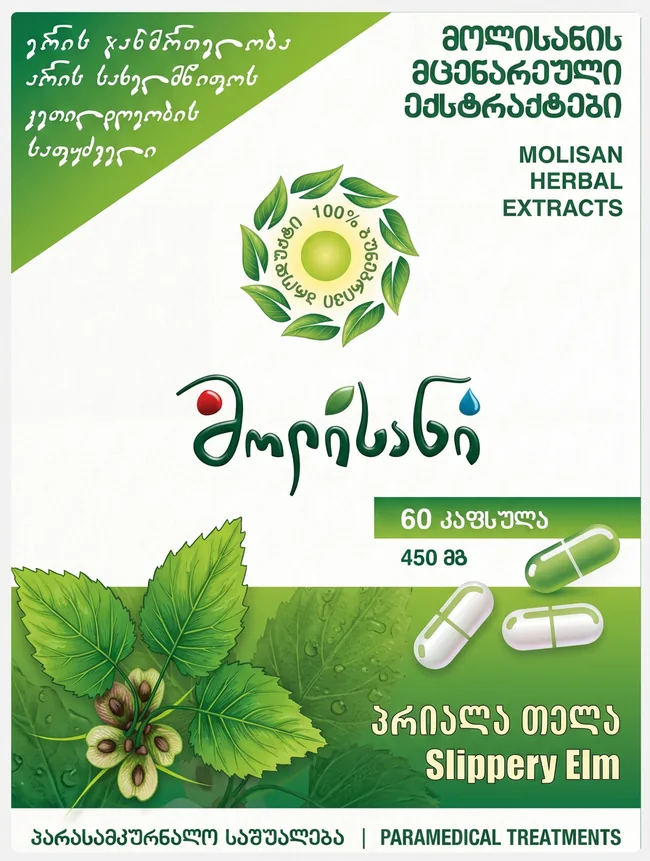
Slippery elm extract. Slippery elm bark contains large amounts of a sticky substance that adheres closely to the walls of the gastrointestinal tract, treating and soothing any inflammation and pain. This substance is highly nourishing because it contains large quantities of readily absorbed calcium compounds. It is therefore used for the following conditions: gastric and duodenal ulcers and erosions, gastro-oesophageal reflux, Crohn’s disease, ulcerative colitis (outside the acute phase), diarrhoea, irritable bowel syndrome and diverticulitis. Slippery elm also helps expel helminths from the body.
Taken together, slippery elm and Molisan Elixir will relieve symptoms that worsen in spring and can cause considerable discomfort. These include heartburn, a burning sensation, bloating, flatulence and irritation of the mucous membrane. The sticky substances in slippery elm are excellent aids for accelerating the healing of ulcers and wounds. A beneficial effect of slippery elm on the course of Helicobacter pylori infection has also been confirmed when used alongside the main treatments.
Slippery elm is a good adjunct for treating psoriasis, wounds, ulcers and other skin problems. It is also often used for irritable bowel syndrome because it contains large amounts of antioxidants.
Slippery elm also helps the digestive system with constipation. Its mucilage improves bowel movements, so it can also be used by people with haemorrhoids.
Slippery elm contains most digestive enzymes. It therefore benefits metabolism and helps the body lose weight properly. This action also helps regulate cholesterol levels.
It can also regulate acidity and protects the gastrointestinal tract against ulcers. It is often used to treat diarrhoea, heartburn and diverticulitis.
It can also be used for anxiety and irritability because red elm is rich in phenols. These substances protect the body from stress and reduce the symptoms it causes.
This plant is also used for psoriasis, a chronic disease characterised by damage to the skin, hair, nails and joints. One of its most common forms is plaque psoriasis. Including slippery elm in the diet reduces the manifestations of psoriasis. Dermatologists therefore often recommend it to patients with psoriasis.
Slippery elm can also help the body during inflammatory processes in the genitourinary system. It works particularly well for cystitis (inflammation of the bladder).